
Cannabis Concentrates: How They Are Made, Why You Want Them, and How to Use Them
What are cannabis extracts and concentrates?
All cannabis extracts are concentrates, but not all concentrates are extracts. The main difference is that extracts are a specific type of concentrate, produced using chemical solvents like butane, CO2 or ethanol with the goal of separating cannabinoids (THC, CBD, CBN, CBG, CBC, THCV, etc.) from plant matter. Concentrates encompass all forms, including solventless products like rosin or hash, which are made using physical or mechanical methods like ice, water, heat and pressure. Both deliver a highly potent dose of THC and terpenes, just with different production methods.
Extracts = Solvent-Based
Concentrates = Broader Category (Solvent-Based and Solventless)
Dictionary

Trichomes
Glandular Trichomes = Microscopic, hair-like structures on the plant that produce resin, cannabinoids like THC, and terpenes.
Non-Glandular Trichomes = Do not produce cannabinoids, and act as part of the plant's defence mechanism.
Both types of trichomes can be further classified based on size, shape, etc.

Rosin
What is it and how is it made:
A pure and highly potent cannabis concentrate made without any chemical solvents. It is extracted using heat and pressure, squeezing the plant's trichomes to produce a rich, flavourful extract that preserves the natural components of the strain, providing a full-spectrum, artisanal experience.
Quality in = Quality out. Craft quality flower can produce higher quality rosin. Temperature plays a large role in the quality, colour and yield of the final product; however, some strains are naturally more resinous and produce better, higher volumes overall.
Higher quality rosins tend to be pale, off-white or a golden hue, with the consistency of thick tree sap.
Lower quality rosins tend to have a dark brown or even slightly green colour, with the consistency of thick tree sap.
How to use:
Infuse your joints: roll it into a snake or spread it on a paper
In a dab rig (available in all shapes and sizes)
In concentrate vape devices
In pre-filled 510 vape cartridges or disposables
Rosin-infused edibles or drinks

Resin
What is it and how is it made:
A sticky, sap-like substance produced by the plant's trichomes. It holds the plant's most concentrated level of active compounds, including THC and terpenes. Depending on how it is processed, resin can mean a couple of different things:
Natural Plant Resin: On the living plant, resin acts as a protective shield. The stickiness traps pests, and the bitter taste and potent aroma deter animals while protecting the flowering buds from harsh weather or UV rays. In prerolls you may notice discolouration on the paper. That's resin!
Extracted Resin: A highly potent concentrate made using solvents like butane or propane to chemically strip the sticky trichomes from the plant.
Reclaimed Resin: The dark, tar-like residue left behind in a pipe or bong. It is not recommended to consume due to high levels of impurities and degraded compounds.
How to use:
Infuse your joints: roll it into a snake or spread it on a paper
In a dab rig (available in all shapes and sizes)
In concentrate vapes
In 510 vape cartridges or disposables
Resin-infused edibles or drinks
Live Rosin or Resin: When it is listed as live, it means the fresh plant was flash frozen immediately after harvest. Freezing preserves even more of the plant's natural compounds, like terpenes, and results in a product with a much stronger, fresher aroma and flavour.
Cured Rosin or Resin: A cured concentrate means that the plant was fully cured before being made into a concentrate. This provides a more stable shelf life, high potency and more affordable pricing.

Kief
What is it and how is it made:
Refers to the trichomes that fall off cannabis flowers. It is easy to capture in a multi-chamber grinder, or it can be purchased. Kief packs a higher level of THC because it is a concentrated collection of trichomes. It looks like a fine, powdery dust that ranges in colour depending on the strain it comes from.
How to use:
As a bowl topper
Sprinkle a thin layer in a joint
Make your own hash
Cook with it

Hash
What is it and how is it made:
Made by isolating and compressing trichomes. Traditionally this is done through dry-sifting or ice water extraction, which creates Bubble Hash (using ice and water freezes the trichomes so they break off, and is typically the cleanest method). Once collected, the trichomes are pressed using heat and pressure into dense blocks, balls or crumbly chunks. This removes excess plant material, providing a stronger and more flavourful experience compared to cannabis flower. Some hash is softer and more mouldable than others due to cure time, the amount of remaining plant material, the specific extraction method used, and cannabinoid or terpene profiles.
How to use:
Like all concentrates, hash is versatile in use:
Smoked or vaporized by mixing it with regular flower in a joint or bowl
Smoked on its own in a designated hash pipe
Vaporized using devices that allow for it

Distillate
What is it and how is it made:
A highly refined form of cannabis extract that has undergone processing to isolate specific cannabinoids (THC, THCV, CBN, CBG, CBD, CBC). It is known for its high potency and the removal of nearly all other plant components, like terpenes. Distillate tends to lack flavour and aroma because of the missing terpenes, which is why they are commonly added back in, whether botanical or cannabis terpenes. This makes it a flexible and affordable base ingredient for edibles or vape cartridges. It is a complex and technical process that happens in a controlled lab with specialized equipment and in-depth knowledge of chemistry.
Here is a basic process:
Extraction
Winterisation
Filtration
Evaporation
Decarboxylation
Distillation
Refinement
How to use:
One of the most common extracts used in 510 vape cartridges and disposables, typically with a more artificial fruity flavour, for easy discretion
Sublingually, through oils or tinctures you place under the tongue, which allows quick absorption into the bloodstream in as little as 15-30 minutes. Because you are ingesting it, it provides a longer-lasting effect compared to smoking, with discreet, easy-to-control dosing
Edibles and capsules. These may take longer to feel the effects, but are ideal for longer-lasting relief and provide exact doses in easy and discreet ways
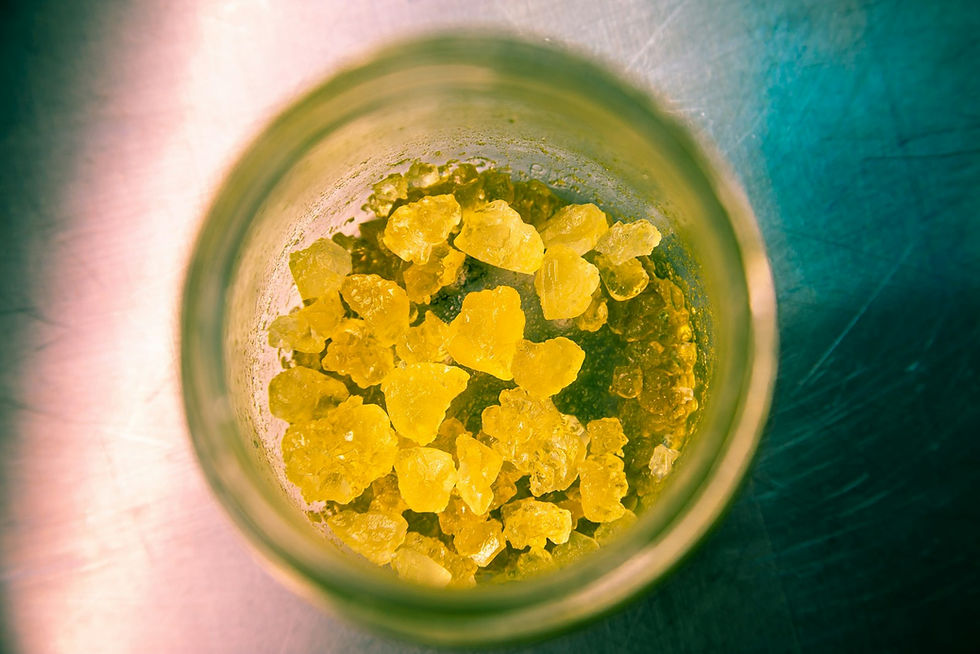
Diamonds (THCA)
What is it and how is it made:
A clear, crystal-like, gem-like, flavourless cannabis concentrate made of nearly pure THCA. It is the most potent cannabis product available, often testing between 97-99.9% purity. THCA is the acidic, non-psychoactive precursor to THC found in the raw plant, so in their raw form diamonds are non-intoxicating, but when heated they convert to highly potent THC. The chemical conversion that turns THCA into THC is called decarboxylation (essentially, heat).
Diamonds are made using hydrocarbon extraction to create a thick, concentrated cannabis "sauce". The sauce is placed in specialized pressure-rated vessels or jars kept at low temperatures. Over days or weeks, the solution supersaturates and the THCA molecules naturally stack into solid, translucent diamonds, leaving behind the terpene liquid or sauce.
How to use:
Most commonly, dabbing in a dab rig
Vaporizing in a concentrate vape
In 510 vape cartridges or disposables
Breaking off small amounts to top your bowls
In a joint: make sure it is finely crushed so it gets enough even heat for the best effects

Terp Sauce
What is it and how is it made:
A highly aromatic cannabis concentrate prized for its intense flavour and complex effects. It looks like a thick, syrupy oil, usually containing chunky crystalline structures (diamonds). Terpenes are the natural compounds that give plants their distinct smell and taste, and in terp sauce this liquid is hyper-concentrated with these aromatic molecules. It is popular because it can provide the "Entourage Effect": the sauce contains the full profile of the plant's compounds (terpenes and cannabinoids), and they work together to create what is believed to be a more well-rounded high compared to pure diamonds.
How to use:
In a dab rig
In concentrate vape devices
To infuse your joints, inside or out


Shatter & Wax
What is it and how is it made:
Highly potent cannabis concentrates made by extracting cannabinoids and terpenes from the plant using solvents (butane or propane), boasting THC levels ranging from 70% to 90%.
Shatter: A glass-like, golden-amber sheet that is brittle at room temperature and "shatters" when broken. The smooth, stable texture occurs because the concentrate is left completely undisturbed and carefully purged during production.
Wax: Opaque, ranging from yellow to brown, with a softer, pliable and crumbly consistency. The consistency is achieved by whipping or agitating the concentrate during the manufacturing process, which alters its molecular structure.
How to use:
In a dab rig
In a concentrate vape
To infuse your joints
With all concentrates, using less is always best. The high-potency highs of concentrates differ from a straight flower high and should be approached with some caution for the best experience. Please ask your budtender any lingering questions!
Happy toking, buds!
References
Alternaleaf. THC distillate: What is it and how is it made?
Leafly. Terp sauce
Leafly. What is kief?
Société québécoise du cannabis. Rosin, resin, distillate: What's the difference?
Verilife. What is marijuana wax?
Weedmaps. How to smoke hash
Weedmaps. Resin
Weedmaps. THCA diamonds: What are they and how are they made?
Photo credits (Unsplash)
Trichomes: XRP Relic
Rosin: Bethany Nieblas
Resin: Christopher Ott
Kief: Balazs Koren
Hash: Hakuna Matata
Distillate: Fulvio Ciccolo
Diamonds: Jeff W
Terp sauce: Christopher Ott
Shatter: Cambridge Jenkins IV
Wax: Jeff W


