
Cannabis Consumption Laws in British Columbia: What You Need to Know
Whether you're new to cannabis or have been enjoying it for years, it's important to understand the laws surrounding cannabis use in British Columbia. Knowing where you can consume cannabis, how much you can possess, and the rules around travel can help you avoid unnecessary fines and enjoy responsibly.
The Basics
Here are the key cannabis laws every adult in British Columbia should know:
Age Requirement
You must be 19 years of age or older to legally purchase, possess, and consume cannabis in British Columbia.
Public Consumption

In general, you may smoke or vape cannabis anywhere tobacco smoking is permitted. However, cannabis consumption is prohibited in many public spaces, especially areas intended for children.
Possession Limits
Adults may legally carry up to 30 grams of legal dried cannabis (or the equivalent) in public and may keep up to 1,000 grams in a private residence.
Home Growing
Adults may grow up to four cannabis plants per residence for personal use. Plants must not be visible from public spaces. Landlords and strata corporations may prohibit home cultivation on their properties.
Cannabis and Vehicles
It is illegal for drivers or passengers to consume cannabis in a motor vehicle, whether it is moving or parked. The only exception is when a motorhome or trailer is being used as a temporary residence while legally parked off a public roadway.
Where You Cannot Smoke or Vape Cannabis
Although cannabis can often be consumed wherever tobacco smoking is allowed, there are important exceptions.
Smoking or vaping cannabis is prohibited:
At bus stops (within 6 metres), ferry terminals, train stations, taxi stands, and inside vehicles or boats
On school property, playgrounds, sports fields, skate parks, swimming pools, and other youth-focused areas
On hospital properties, assisted living facilities, community care centres, and most health authority properties (except designated smoking areas)
In many municipal and regional parks. Provincial parks generally only permit cannabis consumption in designated campsites or areas identified by park staff.
Within 6 metres of doorways, windows, and air intakes of public buildings and workplaces
A simple rule of thumb: if tobacco smoking isn't allowed, cannabis probably isn't either.
Travelling with Cannabis
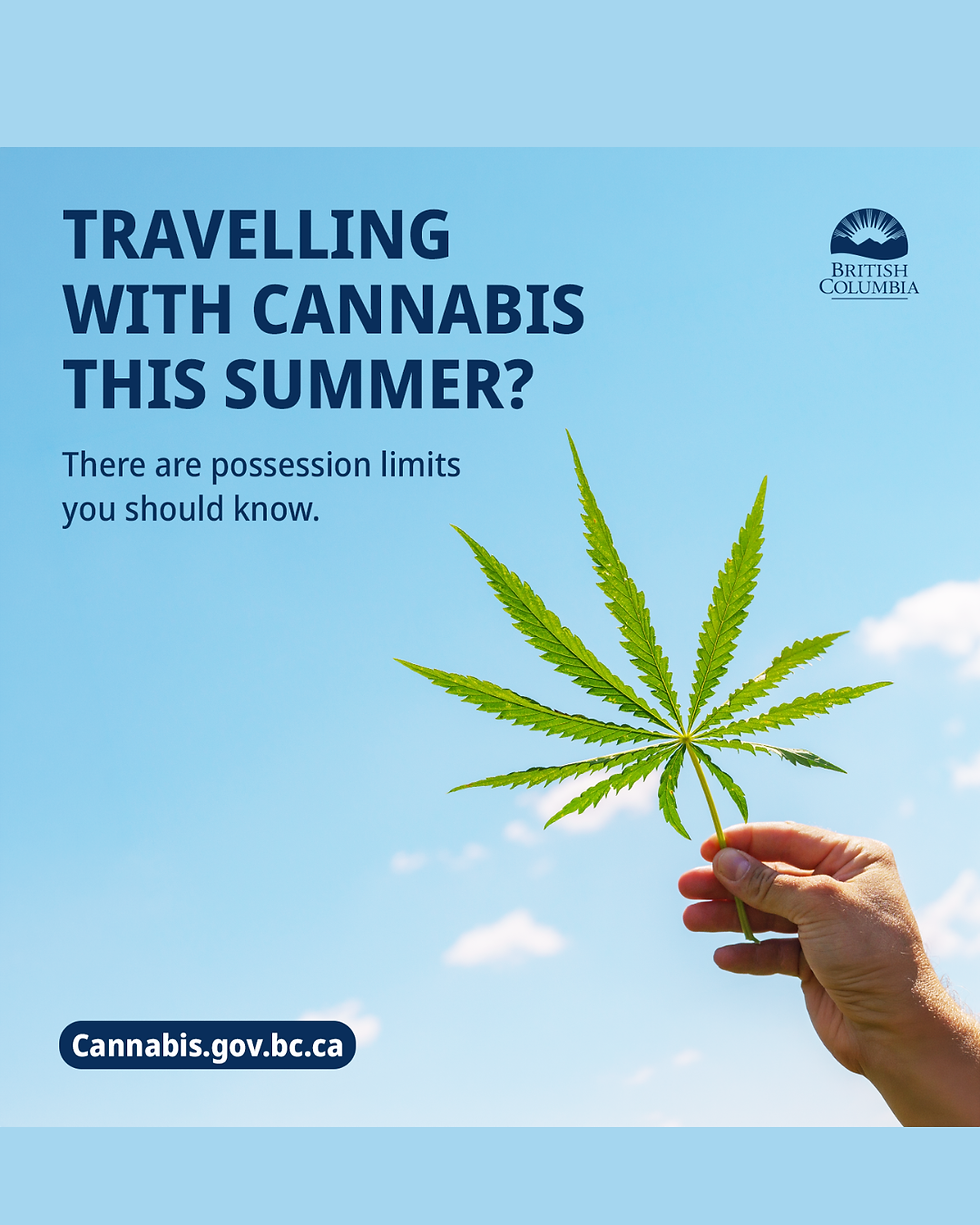
If you're travelling within Canada, there are a few important rules to remember.
You may travel within Canada with up to 30 grams of legal cannabis.
Cannabis may be packed in either checked baggage or carry-on luggage when flying domestically.
When travelling by vehicle, cannabis must be stored so it is not readily accessible to the driver or passengers (for example, in the trunk).
Never drive while impaired.
One rule is especially important:
Do not cross an international border with cannabis.
Even if cannabis is legal where you're travelling, it remains illegal to bring cannabis into or out of Canada.
Cannabis at Campgrounds

Many registered front-country campgrounds in British Columbia allow cannabis consumption.
However:
Smoking and vaping are generally prohibited on backcountry trails and in common areas such as playgrounds and washrooms.
Individual campgrounds, municipalities, and private campgrounds may have additional restrictions.
Always check local campground rules before your trip.
Quick Do's and Don'ts
Do
Be 19 years of age or older.
Carry no more than 30 grams in public.
Store cannabis safely when travelling.
Follow local smoking and vaping regulations.
Respect campground and municipal rules.
Don't
Consume cannabis in vehicles.
Bring cannabis across international borders.
Smoke or vape in playgrounds, schools, or other prohibited public spaces.
Assume every park or campground allows cannabis consumption.
Consume Responsibly

Cannabis laws are designed to balance personal freedom with public safety. By understanding the rules, respecting shared public spaces, and consuming responsibly, everyone can enjoy a safer experience.
Further Resources
Disclaimer: This article is intended for general informational purposes only and summarizes cannabis regulations in British Columbia at the time of publication. Laws, regulations, and local bylaws may change. It is your responsibility to ensure you are familiar with the current rules that apply to your location and circumstances. For the latest information, please visit the Government of British Columbia's official cannabis resources.


